


August 2026
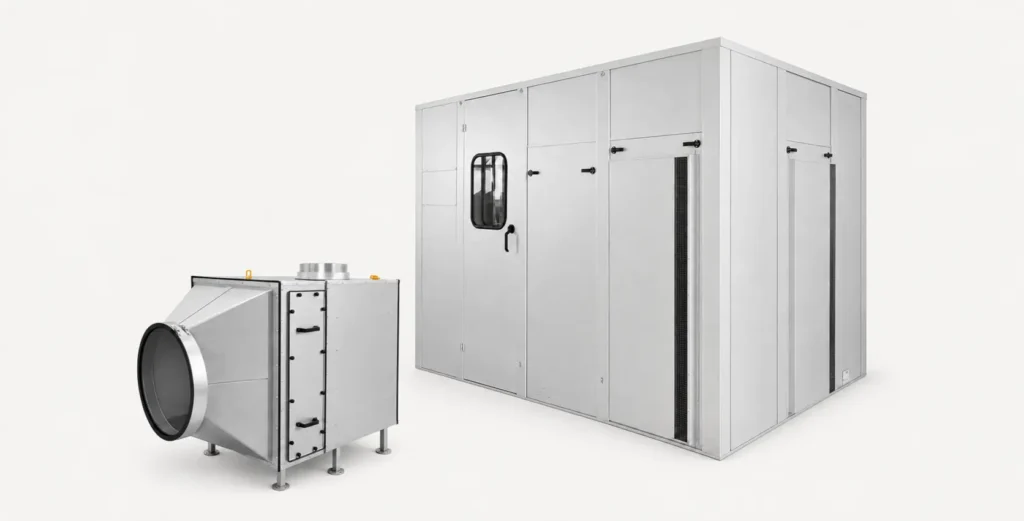
Industrial Noise Control is a new service area at Rothos Energy Systems. The company is expanding its portfolio to include acoustic enclosures and housings, various silencer designs, and customized solutions for industrial systems and processes.
The focus is not on rigid standard products, but on technically coordinated solutions. Design, engineering, materials, connections, and equipment are tailored to the specific noise source, process conditions, installation situation, and operator requirements.
Rothos supports projects from analysis and acoustic design through engineering and detailed design to manufacturing and delivery. Depending on the project scope, installation, commissioning, and integration into existing systems can also be included.
Noise is generated at many different points in industrial systems: at machinery and equipment, in intake and exhaust systems, at piping, outlets, safety valves, or during temporary relief and start-up operations. The technical countermeasures therefore need to be just as varied. An enclosure follows different design principles than a silencer installed in a pressurized or temperature-controlled system.
Why Industrial Noise Control Requires Custom Design
In industrial systems, simply surrounding a noise source with as much sound-insulating material as possible is not enough. The solution must also fit the process and operating concept. Machines require cooling air, equipment must remain accessible for maintenance and inspection, and flow-carrying systems must not be unacceptably restricted by a silencer.
That is why acoustic and flow-related design are considered together. For an enclosure, relevant factors include airflow, heat dissipation, doors, viewing windows, cable and pipe penetrations, and removable panels. For silencers, additional factors include the process medium, volumetric flow rate, pressure drop, temperature, moisture, filtration, material selection, and connection geometry.
| Design Factor | Impact on the Solution |
| Noise source and frequency range | Determine the noise-control principle, enclosure construction, and design of absorptive or reactive elements |
| Volumetric flow rate and pressure drop | Influence cross-sections, baffle arrangement, transitions, and aerodynamic design |
| Temperature and process medium | Determine materials, insulation, surface protection, and design details |
| Installation location | May require weather protection, supporting structures, and suitable coatings depending on indoor or outdoor installation |
| Maintenance and accessibility | Drive the need for doors, removable panels, access openings, and suitable filter-replacement concepts |
| Interfaces | Determine flanges, transition pieces, pipe connections, mounting points, and integration into the overall system |
| Codes, standards, and customer specifications | May specify special materials, documentation, pressure-retaining design, or ATEX requirements |
The result is a solution that combines noise reduction, flow performance, accessibility, and system integration. This coordination is especially important in existing facilities, where buildings, piping, and maintenance access routes impose fixed constraints.
Three Product Groups for Industrial Noise Control
The new service area is divided into three main groups. They cover both the enclosure of complete machines and equipment and noise attenuation in intake, exhaust, pressure, and process systems. Rothos also develops custom designs for applications where dimensions, materials, or operating conditions fall outside common standards.
Acoustic Enclosures & Housings
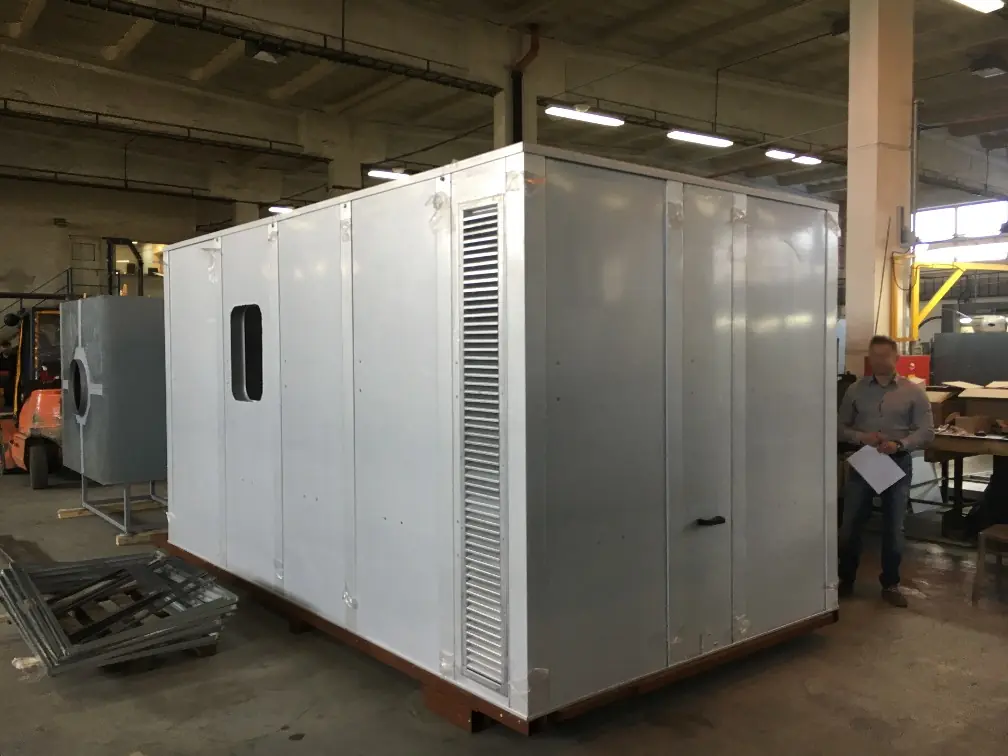
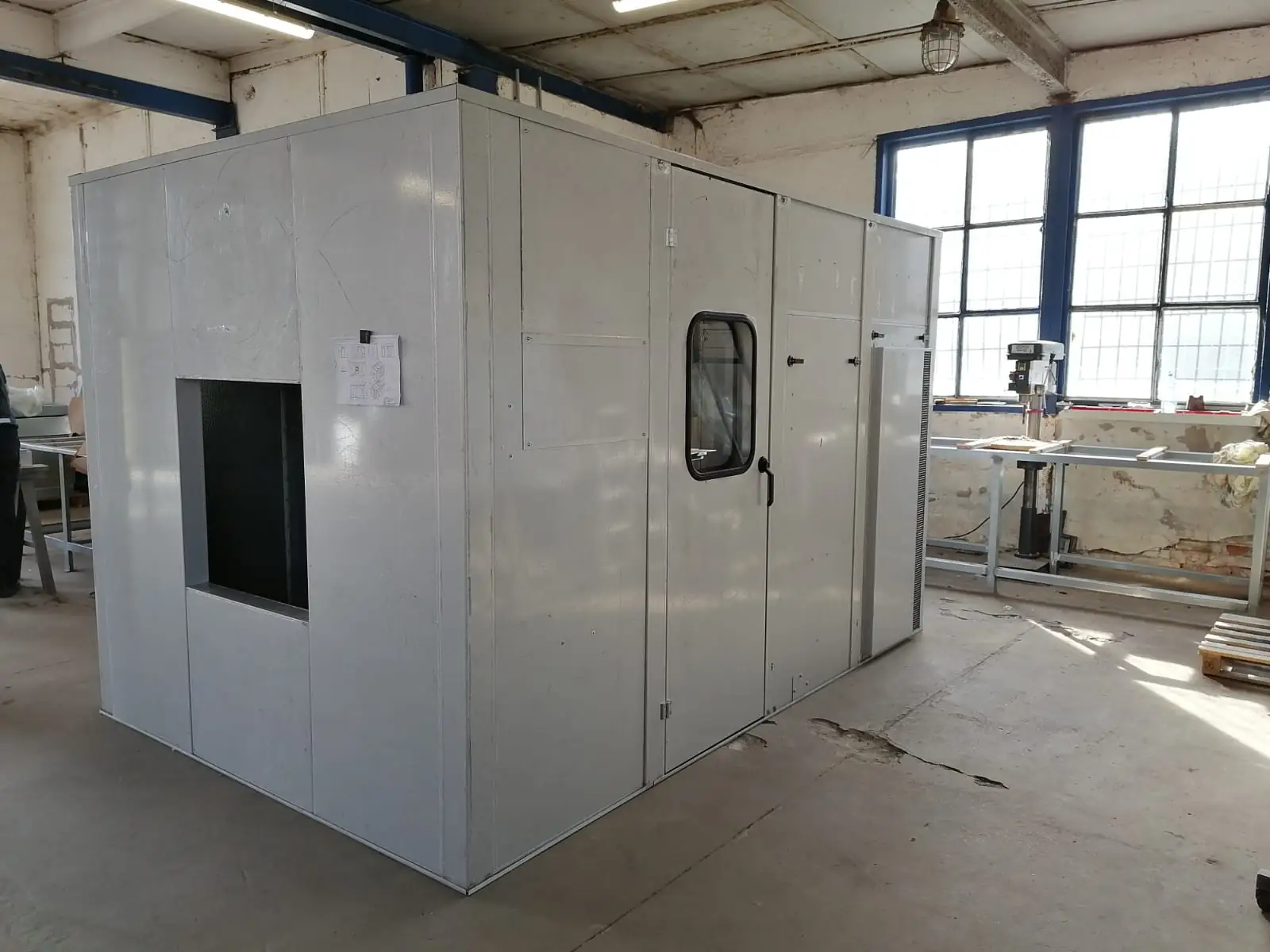
Modular and removable enclosures for machinery, equipment, and complete system areas, designed for indoor or outdoor installation.
Silencers
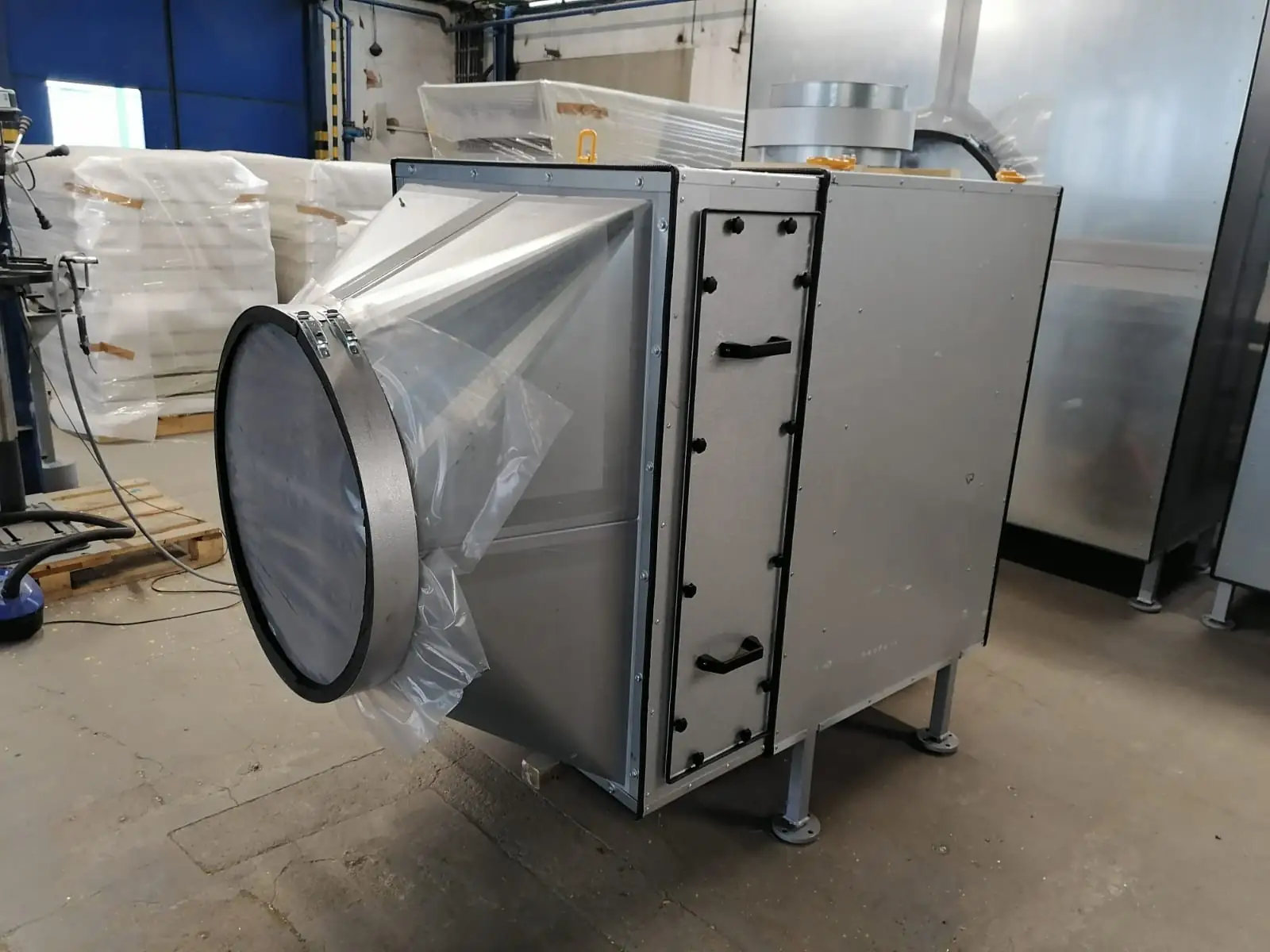
Intake, blow-off, start-up, pressure, and flue gas silencers as well as conical diffusers for different flow and installation conditions.
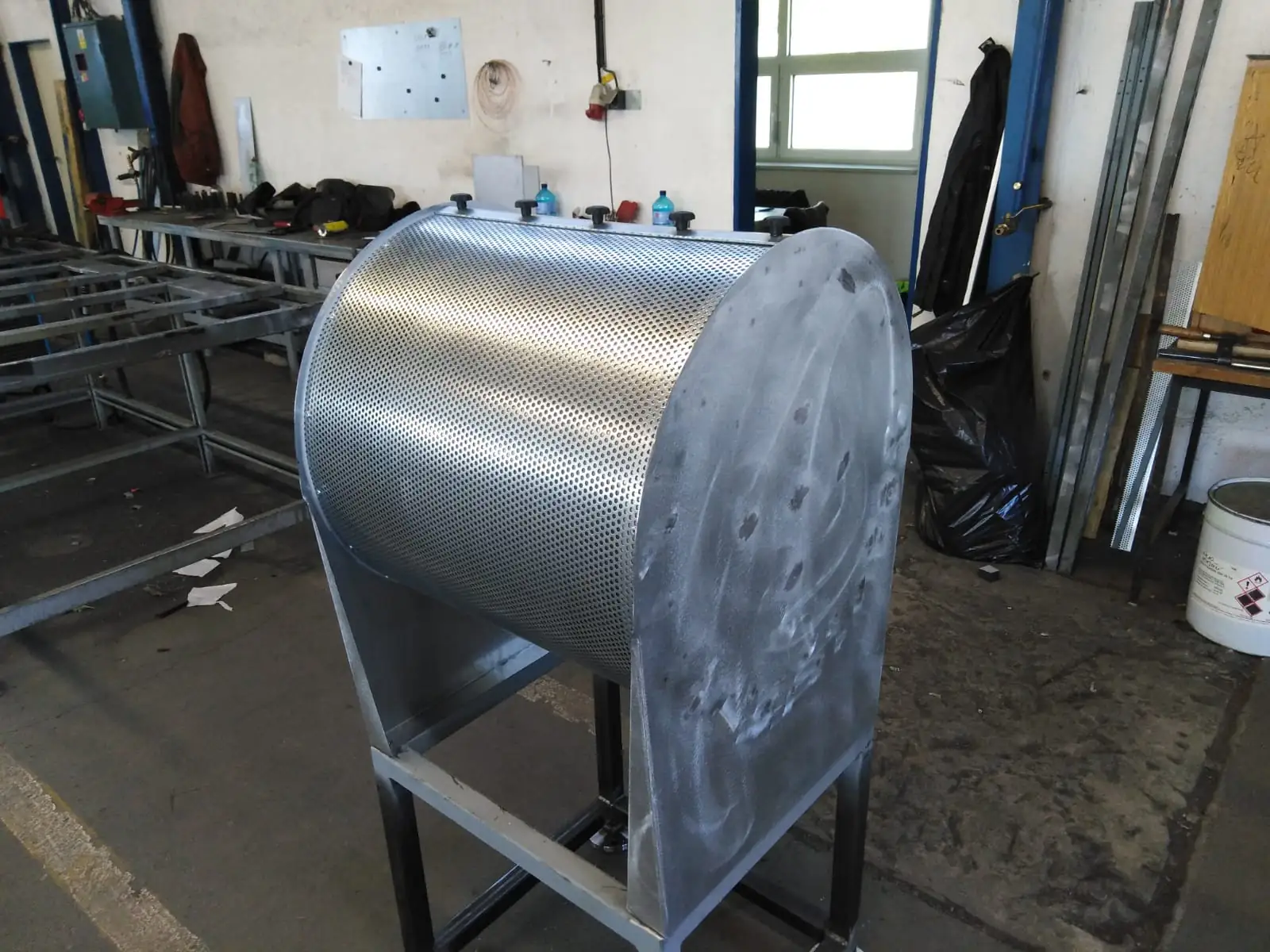
Customized Solutions
Individually engineered products, pressure vessels, and special designs based on process data, customer specifications, and applicable technical requirements.
Acoustic Enclosures & Housings for Machinery and Industrial Systems
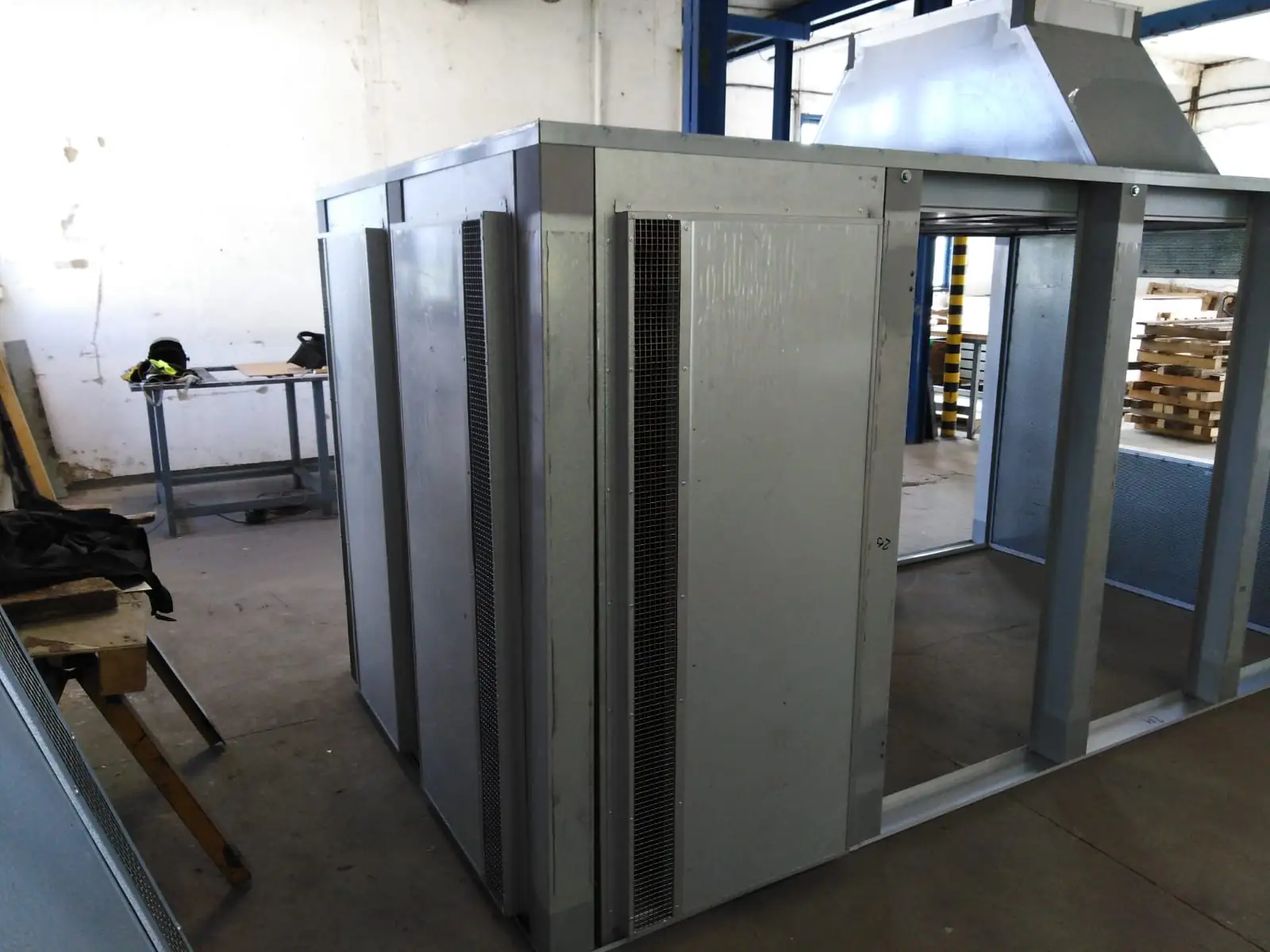
Acoustic enclosures and housings physically isolate noise sources from their surroundings. Typical applications include compressors, turbines, generators, pumps, fans, and other industrial equipment. Depending on the task, a compact housing may be sufficient, or a walk-in enclosure may be required to surround larger parts of a system.
Designs are available for indoor and outdoor applications. The range extends from small units starting at about 3 ft to enclosures more than 65 ft long. Depending on the environment, materials may include galvanized sheet steel, coated carbon steel, or stainless steel. Small enclosures can be self-supporting, while larger solutions use a structurally engineered support frame.
Ease of maintenance is an important design objective. Removable panels, doors, viewing windows, supply and exhaust air openings, and integrated fans are planned so that the enclosed equipment remains accessible and safe to operate. Weather-resistant and ATEX-compliant designs are also available for suitable applications.
- indoor and outdoor installation
- self-supporting or structural-steel-supported design
- removable and walk-in designs
- integrated supply and exhaust ventilation to suit operating requirements
- galvanized steel, coated carbon steel, or stainless steel
- weather-resistant and project-specific ATEX-compliant designs
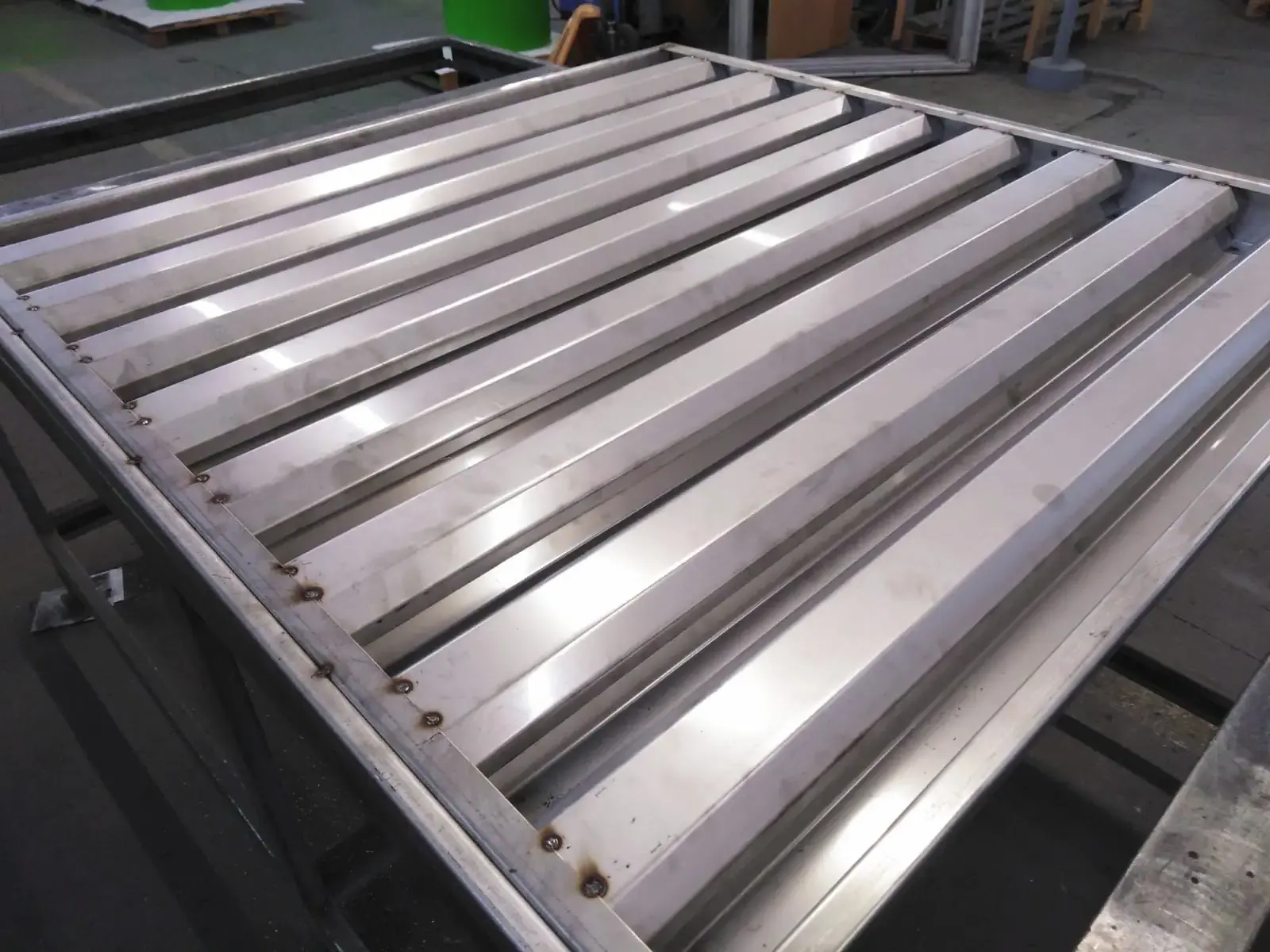
Silencers for Intake, Pressure Relief, and Flue Gas
Silencers form the largest product group in the new portfolio. Their design is determined by the specific application. In addition to the required acoustic performance, key factors include volumetric flow rate, pressure drop, process medium, temperature, moisture, material selection, connection geometry, and available installation orientation.
- Intake silencers: for noise reduction in intake systems, optionally combined with filtration stages, moisture separation, and suitable transition pieces.
- Blow-off and start-up silencers: for temporary or recurring discharge events, such as start-up, pressure relief, or blow-off operations.
- Pressure silencers: for pressurized systems and process applications with custom-engineered connection and vessel geometries.
- Conical diffusers: for aerodynamically coordinated expansion of duct or pipe cross-sections, depending on the application in combination with acoustic functions.
- Flue gas silencers: for exhaust and flue gas systems, tailored to temperature, flow conditions, material requirements, and installation situation.
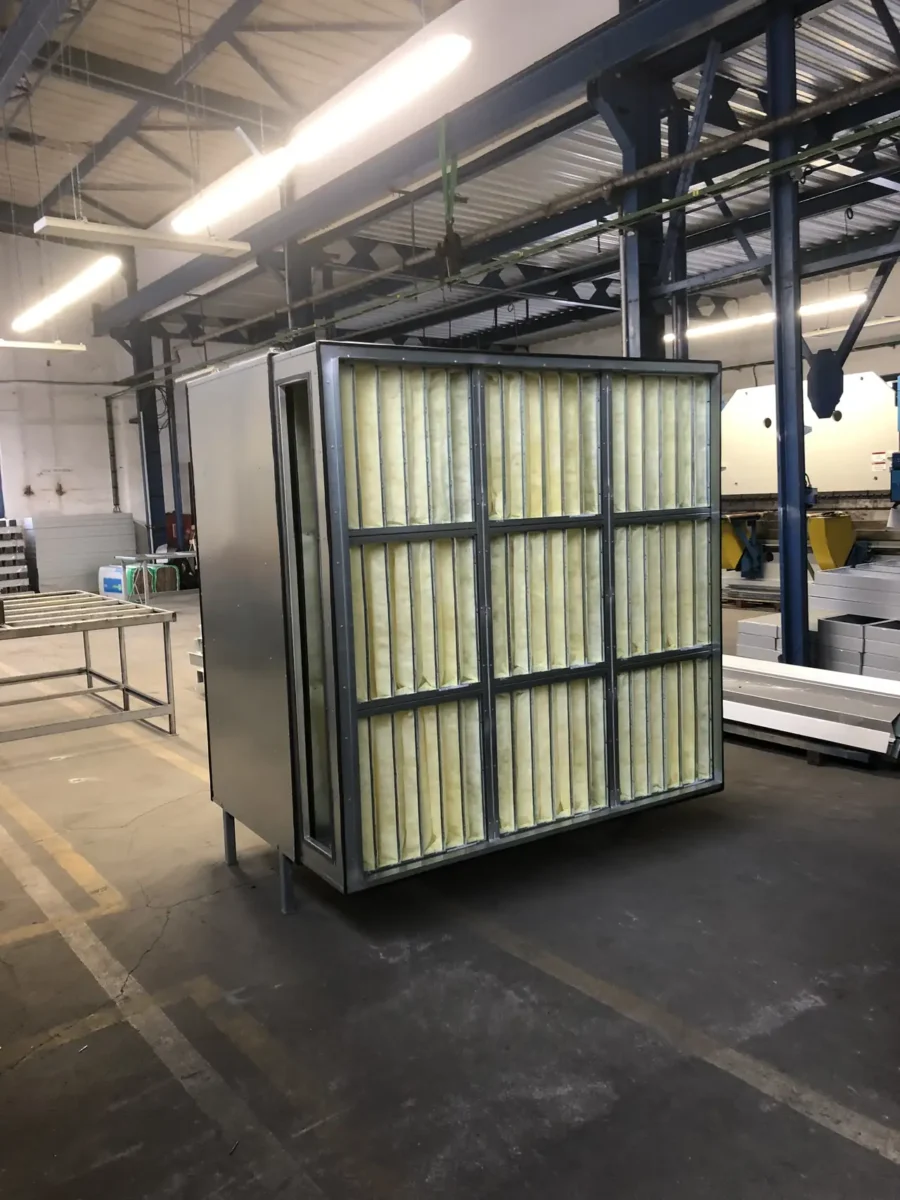
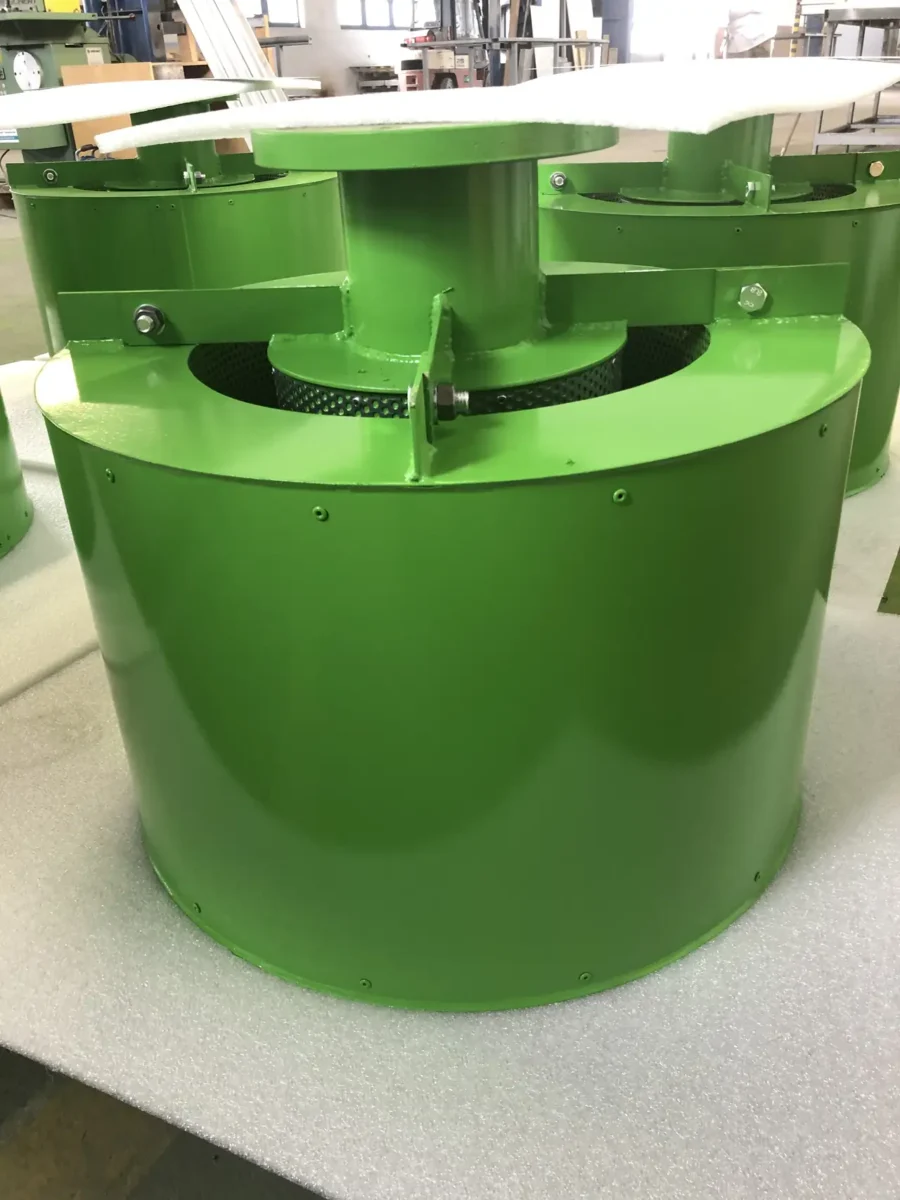
Intake and Filter Silencers
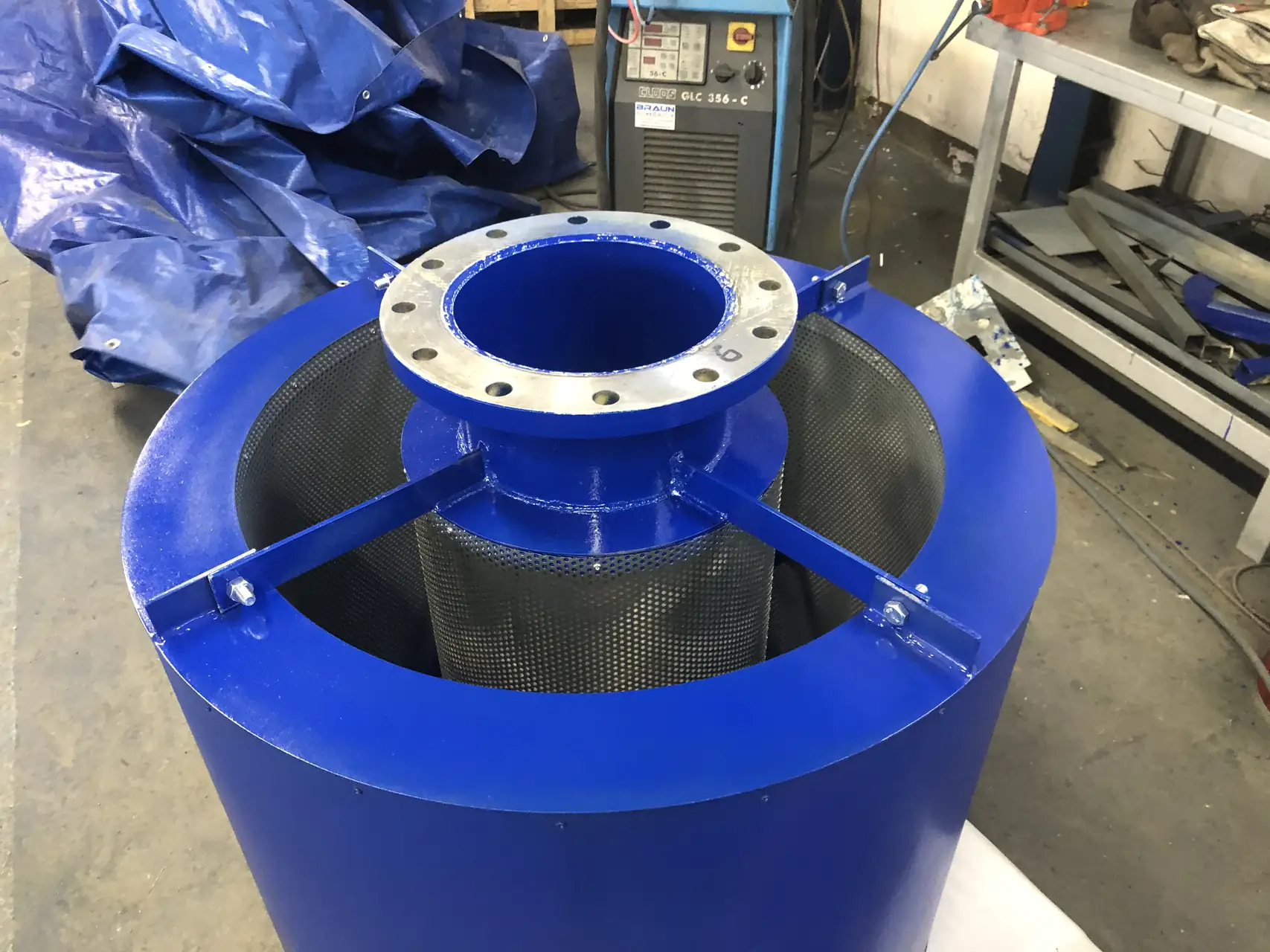
Intake and filter silencers can combine a double-wall insulated housing with baffles engineered for both airflow and acoustic performance. The absorptive fill materials are protected by fiberglass layers and perforated sheet metal. Materials are coordinated with one another and selected for a durable, moisture-resistant, noncombustible construction.
Equipment options can include different filter classes, single- or two-stage filtration concepts, moisture separation, and a pressure indicator. Rectangular transition pieces, conversion to round pipe connections, or a 90-degree intake path from above or below can be incorporated directly into the design. The service side for filter replacement is also adapted to the available site space.
Heavy-Duty Designs and Intake Towers
Heavy-duty intake silencers and intake towers are available for outdoor installation and demanding industrial applications. These structures are fabricated from heavier-gauge steel and include all required supports or a dedicated support structure. Transition pieces and baffles are designed to match the system.
Depending on the environment, coated carbon steel or various stainless steel grades can be used. In addition to acoustic performance, key priorities include weather resistance, mechanical strength, ease of installation, and secure connection to the intake system.
Blow-Off, Start-Up, and Pressure Silencers
Blow-off and start-up silencers are designed for processes in which gas or steam is temporarily discharged at high flow energy. The design, connection, and internal elements must therefore match the process medium, operating conditions, and transient load case. Flow discharge routing and mechanical support are also part of the engineering scope.
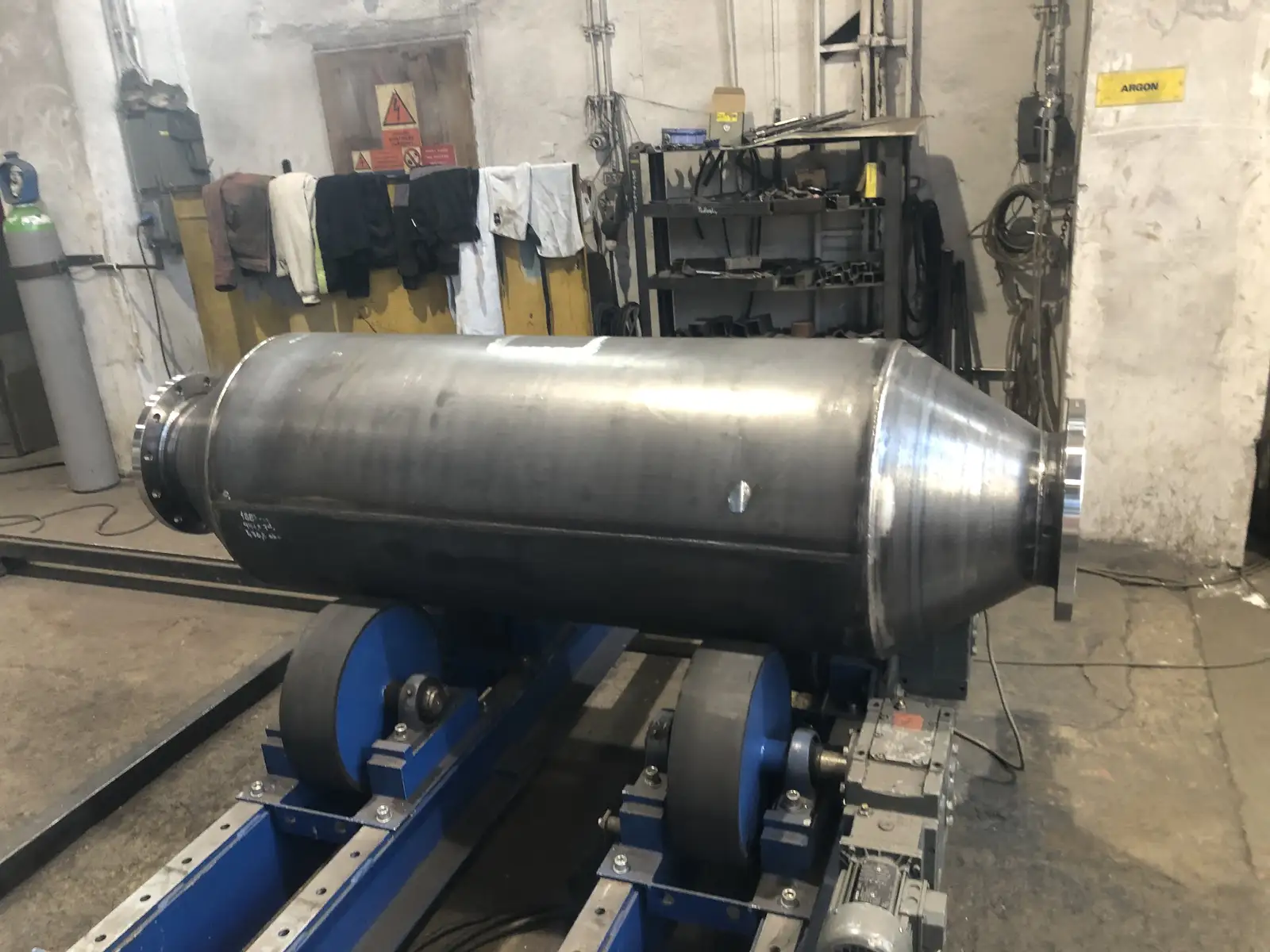
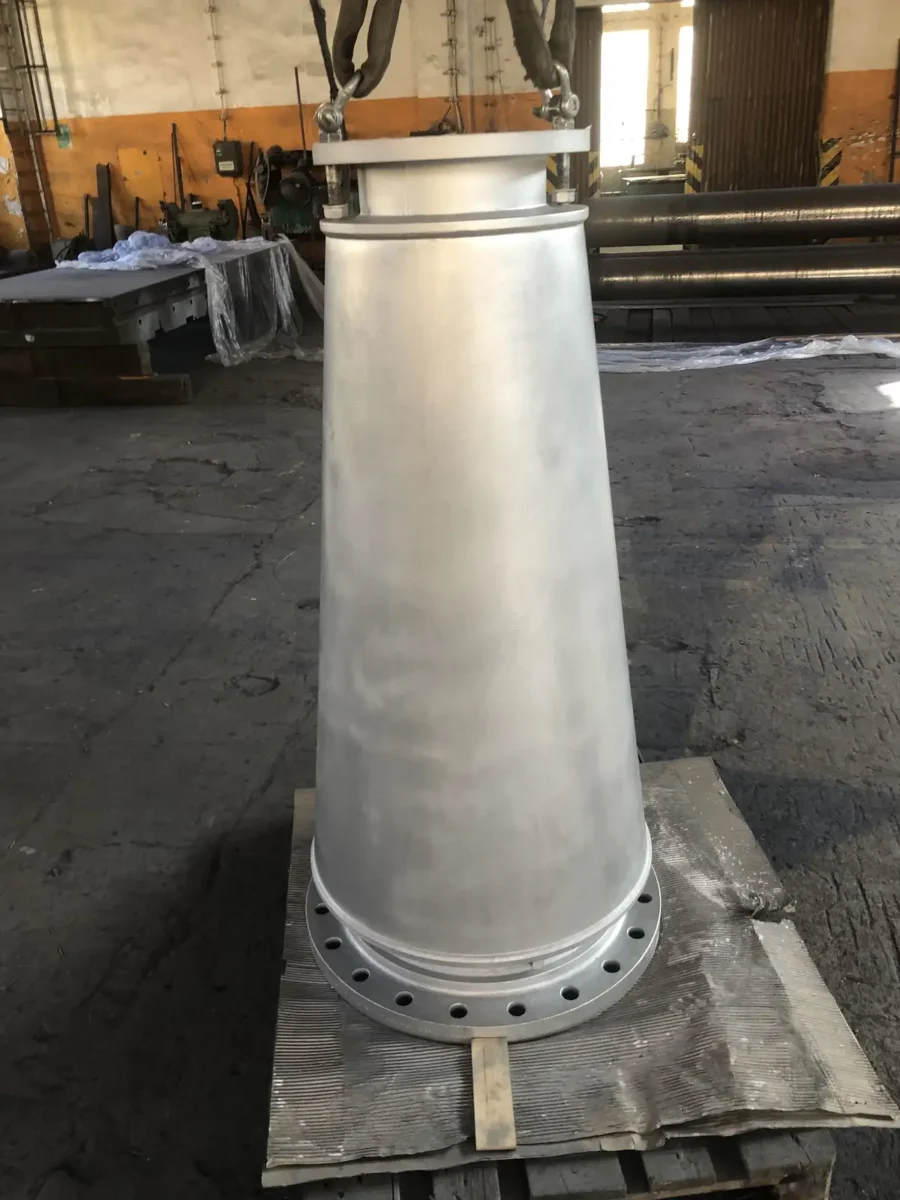
For pressure silencers, conical silencers, and conical diffusers, pressure-retaining components and specific codes may also apply. Acoustic performance is then combined with vessel design, material selection, and fabrication requirements. Flue gas silencers are in turn matched to exhaust-gas temperature, flow conditions, and the existing flue gas routing.
Customized Solutions Instead of Off-the-Shelf Products
Many industrial noise-control challenges cannot be solved with an unchanged standard product. Existing piping layouts, limited space, high temperatures, corrosive media, special materials, or pressure-retaining components require application-specific engineering.
Rothos adapts the solution to the process, operating conditions, and technical specification. The range extends from modified designs proven in many applications to fully custom-engineered products. These can include pressure vessels, conical silencers, conical diffusers, intake towers, transition pieces, and combined structural-steel and noise-control assemblies.
Customization can apply to individual details or to the entire product. Examples include nonstandard flange patterns, special dimensions, unusual installation orientations, multi-part designs for restricted installation access, special surface treatments, or material combinations. Combining several functions in a single assembly can also be part of the solution.
For operators, this means the existing system does not have to be adapted to a rigid catalog product. Instead, the product is developed to integrate as effectively as possible into the process, available space, and maintenance procedures.
Depending on the project and target market, pressure-retaining custom solutions can be designed and fabricated in accordance with applicable codes such as PED, EN 13445, or ASME. Available materials include carbon steel and various grades of stainless steel.
From Concept to Delivery
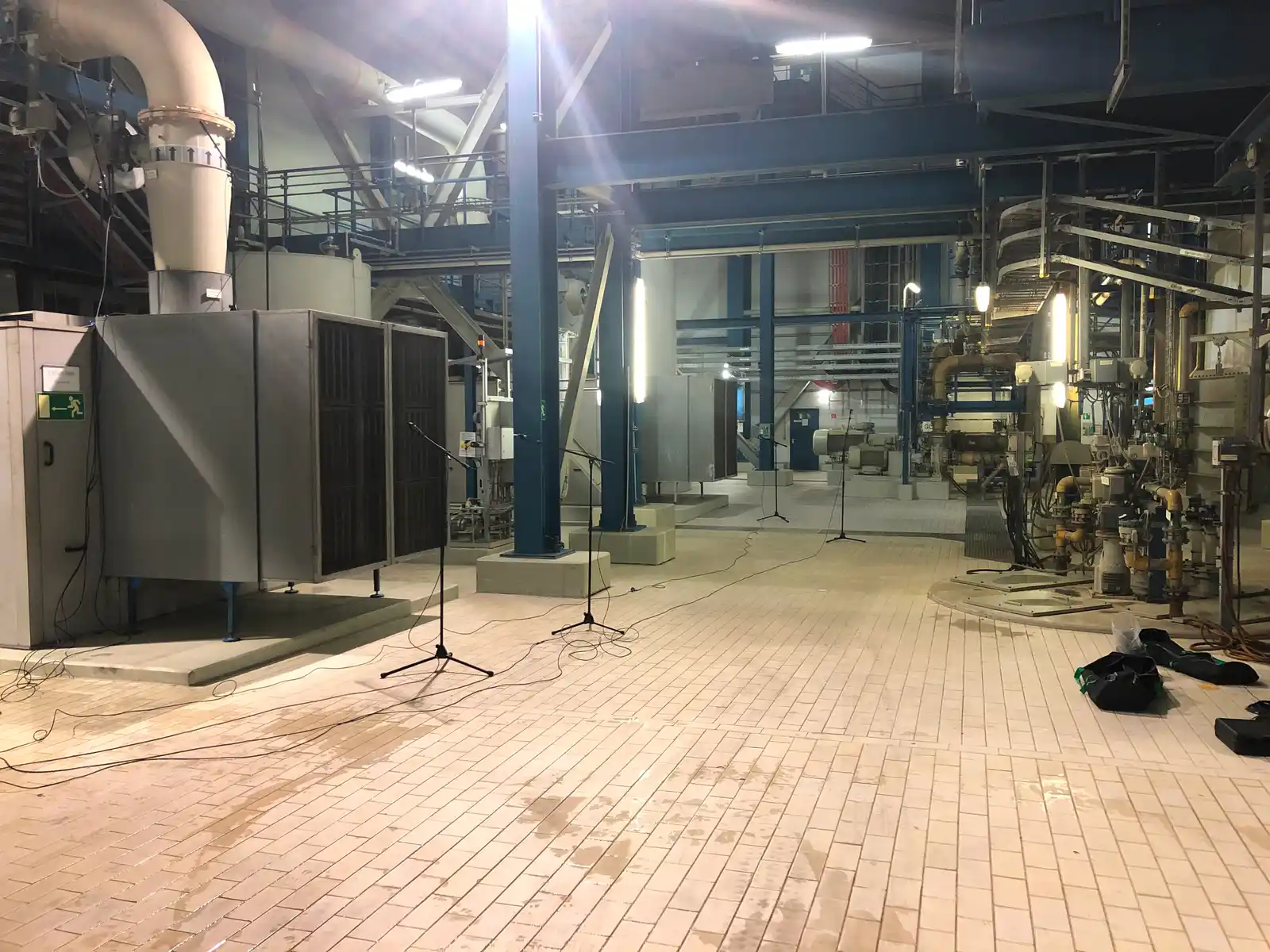
Industrial noise control is a system-level engineering task. Acoustic performance cannot be considered separately from flow, cooling, accessibility, structural requirements, and process safety. That is why each project begins with an assessment of the existing situation and technical requirements.
| Project Phase | Typical Scope |
| Analysis and Consultation | Assess noise source, installation location, operating data, interfaces, and maintenance requirements |
| Acoustic Design | Determine the noise-control principle, required design, and suitable absorptive or attenuation elements |
| Flow Analysis | Account for volumetric flow rate, pressure drop, ventilation, temperature, and connection geometries |
| Engineering and Design | Create 3D designs, support structures, material specifications, fabrication drawings, and technical documentation |
| Manufacturing and Surface Treatment | Fabricate project-specific components, apply coatings, or manufacture in stainless steel |
| Delivery and Implementation | Delivery and, depending on the project, installation, commissioning, and integration into the system |
This end-to-end approach combines plant engineering expertise with acoustic and flow-related design. The goal is a robust, cost-effective, and maintenance-friendly industrial solution that not only works in calculations but also integrates effectively into day-to-day plant operation.
Transport, installation sections, lifting points, mounting provisions, and future disassembly routes are therefore considered during the planning phase. This is especially important for large enclosures and heavy silencers. A well-prepared design reduces field modifications and makes later inspections, filter replacement, and maintenance work easier.
Modular enclosures can be assembled using bolted panels, eliminating the need for field welding at panel joints. The support structure, doors, ventilation elements, and penetrations are designed as one integrated system.
Typical Industries and Applications
The new noise-control solutions are aimed at operators and plant builders in the chemical and petrochemical industries, energy supply, power generation, water and wastewater treatment, food and paper industries, steel production, mechanical engineering, and other process-industry sectors.
Typical applications include intake and exhaust systems, process-air and compressed-air systems, compressor stations, turbines, steam systems, cooling and ventilation systems, fan systems, piping systems, stacks, emergency relief systems, and safety valves. The technically appropriate solution always depends on the specific operating data and site conditions.
Conclusion: Industrial Noise Control as a New Service Area
With this new service area, Rothos Energy Systems is expanding its plant engineering expertise to include custom-engineered industrial noise-control solutions. Acoustic enclosures and housings, various silencer designs, and customized products are tailored to the process, installation situation, and technical specification.
Companies benefit from an end-to-end project approach from analysis and design through engineering and detailed design to manufacturing and delivery. Additional product information, designs, and equipment options are available on the new service page Products: Industrial Noise Control.
Would you like to discuss a specific noise-control requirement? Please contact Rothos Energy Systems.